

Multimodal gallery
A curated collection of archival photographs, historical footage, and recorded audio capturing the diverse religious currents of the 1960s. Explore how faith intersected with social upheaval, cultural experimentation, and civil rights.
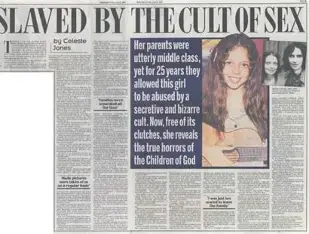
The Children of God Cult
Children of God, later known as The Family International, was a religious movement founded in 1968 by David Berg. The group gained followers through communal living, evangelical outreach, and apocalyptic teachings, but it became widely controversial because of reports of authoritarian control, sexual abuse, child exploitation, and practices such as “Flirty Fishing,” in which members were encouraged to use sex to recruit or gain support from others. Former members and investigations documented serious harm within the organization, particularly involving children. The group later announced reforms and changed its name, but its history remains strongly associated with allegations of abuse and coercion.
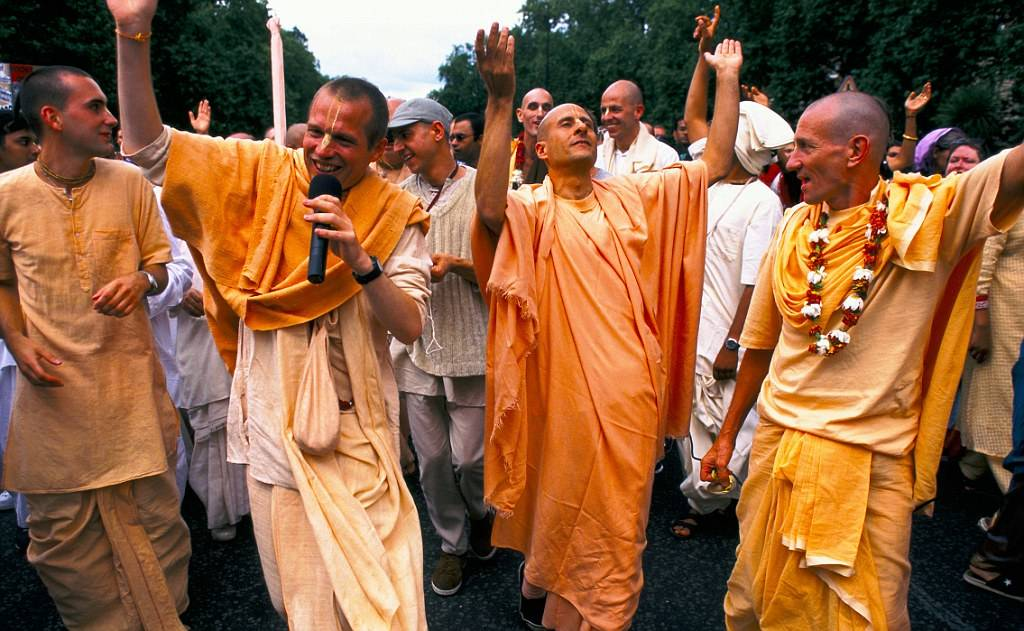
Hare Krishna in the 1960s
The Hare Krishna movement became widely visible in the United States during the 1960s, although its spiritual tradition, known as Gaudiya Vaishnavism, originated in India centuries earlier. In 1965, A. C. Bhaktivedanta Swami Prabhupada arrived in New York City and began sharing the teachings of Krishna consciousness through lectures, books, and public chanting of the Hare Krishna mantra: Hare Krishna, Hare Krishna, Krishna Krishna, Hare Hare / Hare Rama, Hare Rama, Rama Rama, Hare Hare. He founded the International Society for Krishna Consciousness (ISKCON) in New York in 1966. The movement drew attention through lively kirtans, vegetarian food, distinctive devotional clothing, and its message of spiritual life amid the social change and counterculture of the decade. Public chanting in places such as New York’s Tompkins Square Park and later in San Francisco helped introduce Hare Krishna practices to a broader American audience. By the end of the 1960s, ISKCON had established temples in several cities and had become a recognizable part of the era’s religious and cultural landscape.
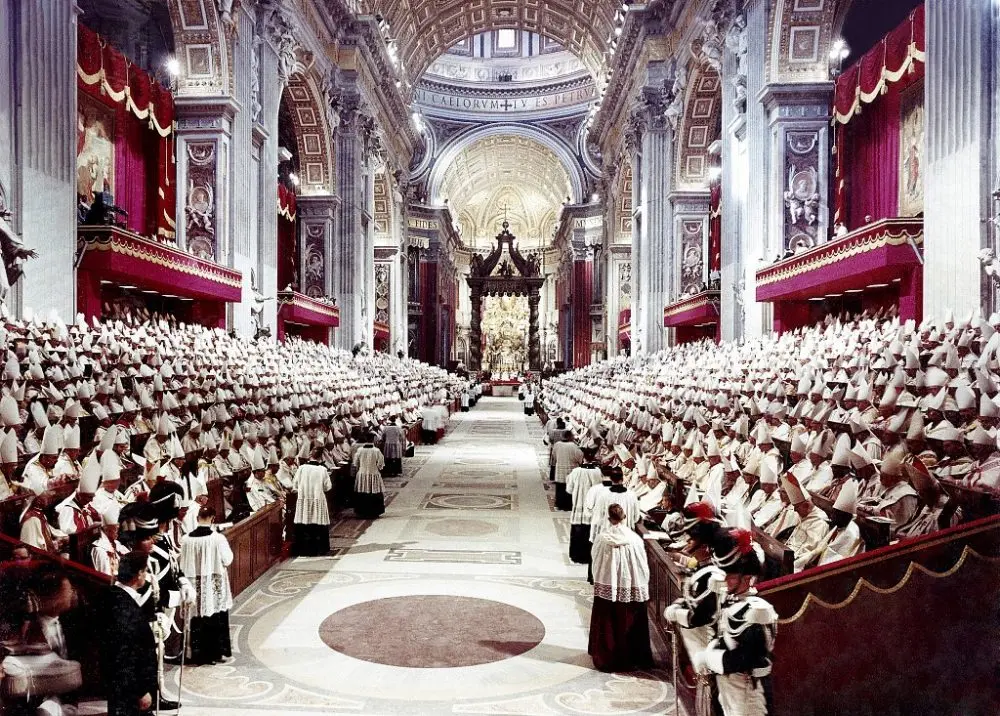
The Second Vatican Council
The Second Vatican Council, commonly called Vatican II, was an ecumenical council of the Roman Catholic Church held in Vatican City from 1962 to 1965. Convened by Pope John XXIII and concluded under Pope Paul VI, it brought together bishops, theologians, and other Church representatives from around the world to consider how the Church could address the modern world while remaining faithful to its teachings. The council produced sixteen major documents covering areas such as liturgy, divine revelation, the role of the Church, religious freedom, ecumenism, and relations with other religions. Its reforms encouraged greater participation by laypeople, allowed broader use of local languages in the Mass, emphasized the importance of Scripture, and promoted dialogue with other Christian communities and people of other faiths. Vatican II did not create a new religion or abandon Catholic doctrine; rather, it sought to present the Church’s faith and mission in ways that could be more clearly understood in contemporary society. Its decisions continue to influence Catholic worship, education, pastoral life, and global engagement today.
Create Your Own Website With Webador